PRESS KIT
3. SUSTAINABILITY AND PROTECTION
OF AKOYA PEARL PRODUCTION
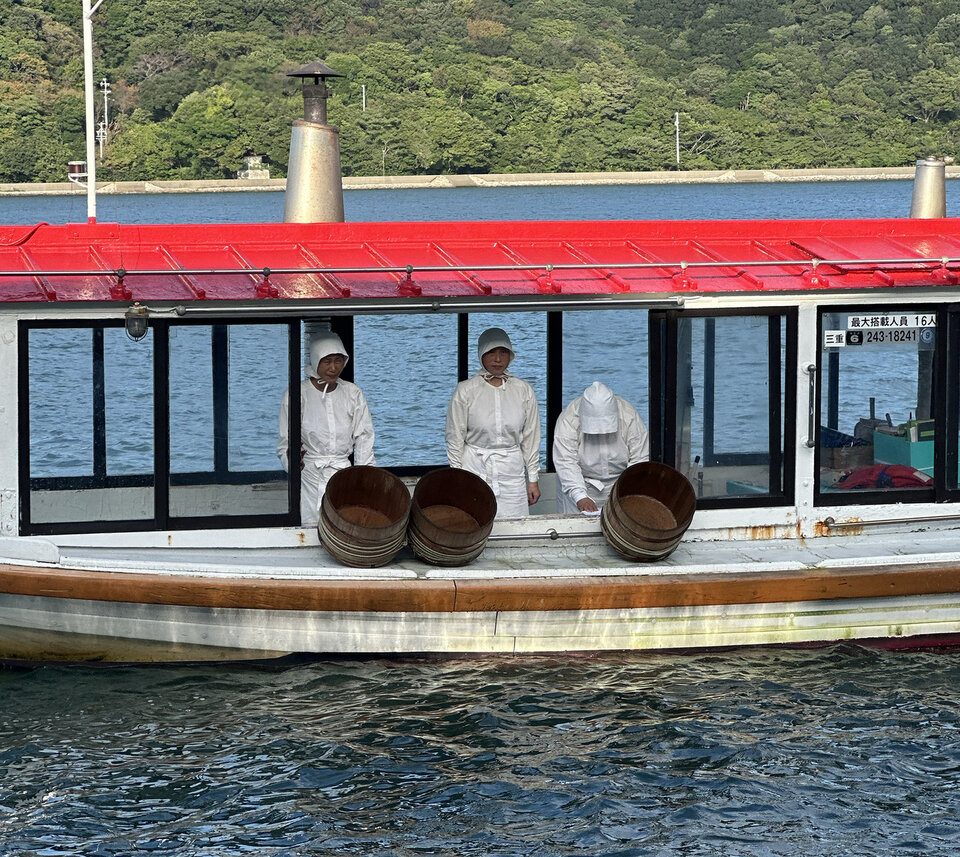
3.1 Planet - Protection of the Natural Environment

Akoya oysters live in a delicate marine ecosystem nourished by nutrients flowing from the mountains to the sea. In the calm waters of Japan’s inland seas, pearls grow slowly, following the rhythm of the seasons-an essential factor in the formation of their distinctive luster.
In recent years, however, this balance has been progressively undermined. Rising sea temperatures and abnormal climatic events have altered coastal biodiversity: traditional fish species have disappeared, replaced by subtropical species, while the winter presence of warm-adapted fish has led to the destruction of seaweed beds, which are fundamental habitats for marine life. The result is an environment increasingly poor in oxygen and biodiversity.
These changes have a direct impact on Akoya oysters: smaller shells, increased vulnerability to disease, and higher mortality rates, leading to a decline in production, quality, and pearl size. While in the past Japanese pearl farms contributed to the conservation of coastal ecosystems, today environmental protection alone is no longer sufficient. A transition toward “nature-positive” aquaculture is required-one capable not only of reducing impact, but of regenerating the marine environment. In this direction, new research and experimental activities are currently being developed.
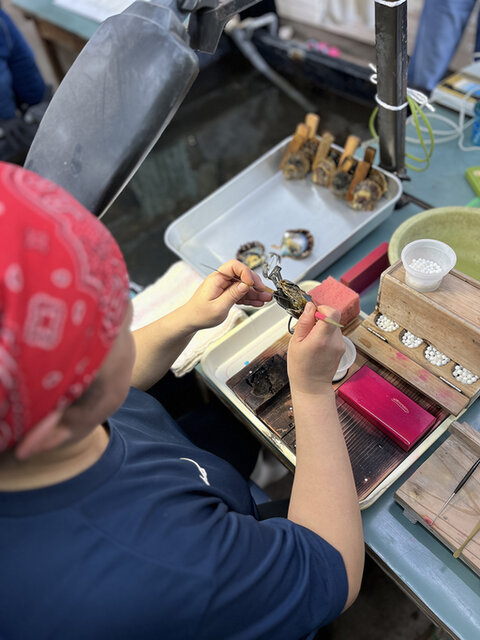
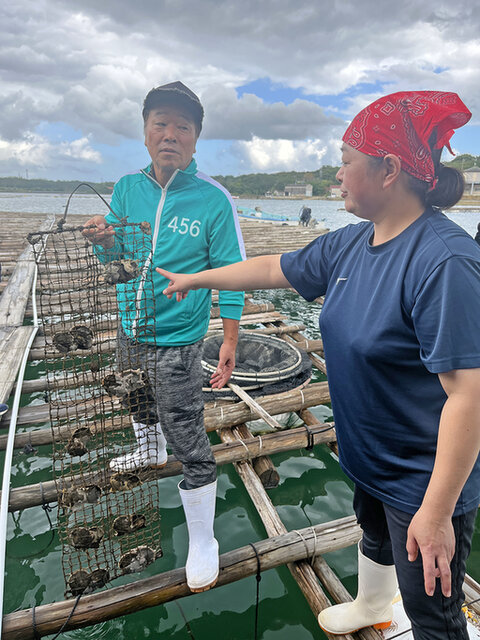
Each Akoya pearl is unique, and this uniqueness reflects not only nature, but also the hand and philosophy of the pearl farmer. Techniques such as nucleation, temperature management, shell cleaning, and the daily monitoring of oysters require experience, sensitivity, and profound knowledge passed down over time. Farmers establish a true dialogue with the oysters, observing their growth day by day.
The entire Japanese supply chain-from cultivation to processing-represents a body of human knowledge that cannot be mechanically replicated. After harvesting, pearls are entrusted to specialists who enhance their individual character through meticulous treatments. Processes such as blemish removal, sorting, drilling, and grading require years of training and extremely refined manual skills. These techniques, often guarded as company secrets, have been developed and perfected by each enterprise over generations.
Respect for the life that gave rise to the pearl is an integral part of this culture: every year, those working in the industry take part in a commemorative ceremony as a sign of gratitude toward Akoya oysters. This ethical approach, combined with technical excellence, enhances the value of pearls as gems rich in meaning.
When transformed into jewelry, Akoya pearls have accompanied human lives for centuries, carrying dreams, memory, and continuity. From a regenerative perspective, pearl farming offers benefits that go beyond the natural environment: it relies almost entirely on local resources, creates employment, and supports regional economies, giving rise to a circular economic model.
In Japan, there is a long-standing tradition of offering pearls to deities, and with the advent of cultured pearls, the custom of wearing or gifting them at key moments in life has become firmly established. Present in both joyful occasions and moments of reflection, pearls possess a “warm humanity” derived from their organic nature, unlike any other gemstone. Even antique pearls are passed down from generation to generation, accumulating emotional and symbolic value.
Today, pearls are increasingly appreciated, and their meanings-sincerity, protection, and peace-are intertwined with a new awareness: that of the pearl as a “nature-positive” gem, capable of representing a virtuous bond between humanity and nature.
Oceans play a crucial role in the global carbon cycle (blue carbon). Beyond algae, organisms such as corals and mollusks also contribute, through biomineralization, to the formation of carbonate structures. While these processes were once thought to release CO₂, new research is reassessing their potential contribution to carbon sequestration.
Pearl farming, which requires neither feed nor chemical substances, is already a low-impact activity in itself. Should it be demonstrated in the future that pearl oyster cultivation also contributes significantly to the carbon cycle, wearing a pearl could take on a new meaning: that of a tangible symbol of a positive contribution to the planet. From this perspective emerges the concept of “Pearl Carbon,” opening unprecedented opportunities for a new industry and a new pearl culture.
Within this context are studies in carbonate biology, a rapidly evolving field of research that brings together young scientists committed to understanding the role of biomineralization within the Earth system. The outcomes of this research could redefine the environmental value of Akoya pearls, further strengthening their role as emblems of sustainable and regenerative luxury.
3.2 People - Individuals, Knowledge,
and Technology
3.3 Pearl - Gem Culture and Regenerative Value
3.4 Challenges and Perspectives:
Toward the Concept of “Pearl Carbon”

A project by Preziosa Magazine
Texts by Silvio Ciniglio